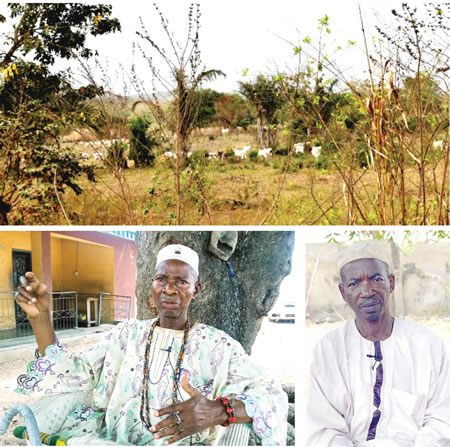
“Please do not talk to my father. He is yet to come to terms with the death of his son. It is a most tragic experience. How does one quantify the loss of a dear brother? My brother was killed like an animal by two herdsmen. His offence was that he asked them to drive their cows off his already cultivated farmland,” Bisi Olaosepin, whose brother was hacked to death, struggled to hold back his tears as he narrate the horrible experience that culminated in the passage of his brother.
The gruesome murder of 27-year-old Samson Olaosepin who, like his father, knew no other life except farming, was regarded by residents of Ayete and Igangan in Ibarapa North Local Government Area of Oyo State, as one death too many. Samson’s murder was in 2017. Yet, rather than abate, the reported cases of killings, rape and kidnapping in the area heightened.
Bisi pointed, with shaky fingers, at the patch of farmland where Samson met his death. “I was not around when the deed was carried out but the gory sight of my brother made my heart sink. We are farmers and we have been in this for many years. My siblings and I would always come to help my father in the farm. This is Igangan and farming is our life. The large expanse of land that you find here and the rich soil has attracted herdsmen and other farmers who are not indigenes of this place. Despite the crude farming tools that we employ here, the harvest is usually rich considering the fertility of the soil.
“But I must quickly add that these herdsmen both Fulani and Bororo—that is how we refer to them — have been with us for many years. I grew up to know them. It is usually a common sight to find them herding their cattle on the large expanse of vegetative land. I grew up knowing the challenge that farmers here are faced with when it comes to clashes between the herdsmen and farmers. Their cows eat up our crops and when we resist, lives are lost,” he said.
While Samson’s death, among many other reported tragedies in the area, remains fresh in communal memory, the murder of Dr. Fatai Aborode on December 11, 2020, by suspected herders was the straw that broke the camel’s back. He was reportedly attacked by suspected herdsmen, macheted severally and died between Tapa and Ayete communities on his way to a hospital in Igboora.
Leaving an aged father, children and an extended family, Aborode’s death marked the tipping point.
While trying hard to hold back tears, the 79-year-old father to the late Dr. Fatai Aborode, Alhaji Lasisi Aborode, told Globalvoice in his residence at Igangan, that the day he received the news of his son’s death was the gloomiest in his life.
‘We once lived happily together with Fulani herders’
Alhaji Aborode told Globalvoice that while growing up, herders and residents of Ibarapa lived harmoniously. “From my childhood, our fathers were friends with Fulani herdsmen. Our fathers even bought cows from them. My forebears were blacksmiths. The Fulani were also farmers. They bought farming implements from my people. We were all friendly. As Muslims, we celebrated festivities together. In fact, they would attend our parties and we also did with them. We had no issues with them. This was my experience when I was a child. This was around 1949.
“Even 40 years back, some Fulani called Baru came around. They would visit us and trade with us. They had large grazing herds. They didn’t graze on our farmlands. They never molested our wives, daughters and mothers. They were wonderful to our farmers,” he said.
Yet he informed that “later, some of them came who are called Bororo. They are wicked and mean. They killed people without any remorse. They are herders. We became disturbed. They would move their cattle into our farmlands and destroy all the crops.
Whenever they were confronted, they would brandish their swords and guns and threaten whoever tried to stop their illegality. They wounded many people, killed others and also kidnapped others. They didn’t stop there; they also rapped our women. Whenever they came across our women in the farms, they would take turns in raping them. Many women have died as a result of this. They rape both old and young women.
“My son had a very large farm. He was a mechanised farmer. He was very generous. Whenever he wanted to harvest his farms, he would employ them to help in harvesting his farm. He would give them money. He was good to them. He was not into cattle business.
On that day, he went to visit his farmers who were harvesting his soya farm. He had many workers and two managers. It was December 11, 2020. I was not at home; I had gone to Igboora. I was called on the phone that a terrible thing had happened.”
Vegetation like no other
Bisi’s description of the vast vegetative landscape that Igangan, Ayete, and Igboora are known for is without doubt. From Ibadan, through Eleyele to Eruwa, as one approaches Igboora, the spread of the landscape provides a ready-grazing meal for cows and an enticing delight for every herdsman. Intermittently, a sight of herdsmen in company of their cattle comes into view. The lush, green scenery and the quiet ambiance give Igboora, Ayete and Igangan a pastoral uniqueness desirous by any herder.
With its headquarters in Ayete, the Local Government Area has other notable towns like Tapa and Igangan. Also, these towns have a number of villages that make them up. Alaagba, Obada, Konko, Oja-Isale and Ajise are some of the popular markets in the local government area. Despite the differences in topographical spread—Ayete’s hilly contours, Igangan’s vegetative spread—the two towns, including Igboora, have a nomadic presence of herdsmen through many decades.
These unique qualities, as Globalvoice would gather, have formed the reasons behind the attraction for herdsmen both within and from “neighbouring countries. My father told me as well as other elderly farmers that because of rich natural landscape, for many years even herdsmen find their way from neighbouring countries here. Unfortunately, while these herdsmen find ready foliage for their cattle, they have been threatening our lives. When we plant crops, we are usually sure of a good harvest. These herdsmen allow their cattle wander on our farmlands thereby causing irreparable loss for us. They come and go. Usually attempts to get them apprehended can be difficult and even when we try to make them pay, they usually resort to violence.”
A litany or tragedies
Following the death of Dr. Fatai Aborode, Yoruba activist, Sunday Adeyemo, popularly called Sunday Igboho, commenced an anti-herders crusade in the region, insisting that Fulani herders left. The backlash that this generated also brought the residents and farmers to the spotlight. In different reactions, residents narrated the sordid experiences they endured at the hands of herdsmen despite government’s promise to provide security.